
How Travel Can Boost Your Creativity
Discover how travel boosts creativity, broadens your mindset and sparks new ideas – including practical tips you can use in everyday life.
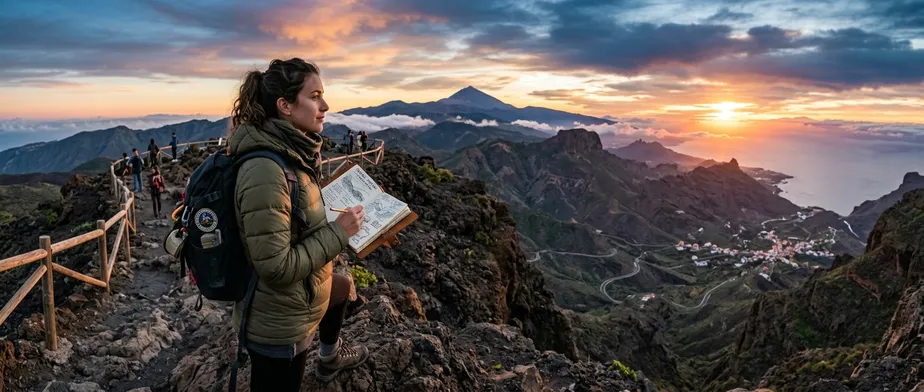
In unfamiliar places, even everyday moments turn into small adventures. New sensory input frees the brain from rigid patterns of thought. Travel disrupts routines, exposes us to the unknown and demands spontaneous problem solving. Research has long confirmed what many people sense intuitively: changes of place and cultural encounters stimulate creative thinking in a way that is hard to achieve in everyday life with its fixed structures and habits. How exactly does this connection work? And more importantly, how can we preserve these creative impulses in the long term instead of slipping back into old patterns once we return home?
How foreign cultures and unfamiliar impressions measurably change our thinking
Cognitive flexibility through cultural distance
Neuroscientific studies show that immersing yourself in a foreign culture triggers measurable changes in the brain. When we are confronted with completely different values, eating habits or social norms, the brain has to create new neural connections. This process, known among researchers as "cognitive flexibility", is a core element of creative thinking. A walk through the volcanic landscapes of the Canary Islands or a visit to a Moroccan souk offers far more than holiday snapshots. Experiences like these train the brain to question familiar patterns and to allow alternative perspectives. Anyone who makes use of helpful travel tips for a stay on Lanzarote experiences first-hand how the barren volcanic island, with its unique architecture by César Manrique, has developed a distinct aesthetic and how this changes your personal sense of form and colour.
The role of the senses in creative thinking
Alongside foreign cultures, unfamiliar sensory impressions also play a key role for creativity. The taste of an unknown fruit, the feel of warm volcanic sand under bare feet or the soft light of a southern sunset all activate areas of the brain that everyday office life rarely touches. The hippocampus, which is responsible for memory and spatial orientation, works at full speed when we explore new places. At the same time, the brain releases dopamine, a neurotransmitter closely linked to motivation and associative thinking. This biochemical reaction helps explain why travellers often find solutions to old problems while they are on the road.
Five creative impulses you can only experience while travelling
Some experiences can only be gained by actually changing your location. There is no other way to get them. The following five impulses, viewed from very different angles, highlight what makes direct experience so powerful and show why even the most gripping book or the most elaborate film can never fully replace the original:
1. Linguistic irritation: Travelling without language skills sharpens your perception of non-verbal communication, which is valuable in creative and design-driven professions.
2. Forced improvisation: Unforeseen situations on the road can encourage spontaneous decisions and support divergent thinking.
3. Material inspiration: Craft markets in Southeast Asia, traditional weaving mills in Peru or ceramic art in the Canary Islands offer tactile impressions that spark new design ideas. Anyone who discovers the opportunity on Lanzarote to enjoy wellness and deep relaxation on the island experiences how peace and time in nature can open the mind to unexpected ideas.
4. Perspective shifts through encounters: Conversations with locals reveal approaches to life that broaden your worldview and creative repertoire.
5. Aesthetic overwhelm: Breathtaking landscapes or buildings trigger a productive shock that breaks up familiar thought patterns and creates space for something new.
Playfully extending travel inspiration: How varied digital experiences create creative breaks in everyday life
After returning from a trip, memories often fade faster than we would like. This makes it all the more important to integrate small creative breaks into everyday life that stimulate the brain in a way similar to a change of place. Playful formats with visual and thematic worlds offer one interesting option here. Anyone who rediscovers travel motifs in interactive formats can briefly reactivate that holiday feeling. Platforms with themed slots often draw on exotic settings, historical eras or adventurous scenarios and offer short, image-rich time-outs from work. The alternation between focus and relaxation, known as a "creative break", is considered particularly fruitful in creativity research. Just as a short trip stimulates the brain through the unexpected, varied game mechanics create small moments of surprise that can disrupt entrenched chains of thought and support fresh associations.
Turning travel experiences into concrete creative projects – a step-by-step guide
From experience to finished work: the three-phase method
Creative impressions from trips are often lost because they are not processed in a structured way. The following method helps turn experiences into tangible results. In the first phase, which takes place during the trip, the focus is on conscious collection: making sketches, recording voice notes, taking material samples or shooting unusual photos. The key here is not quality but the quantity of impressions. The second phase begins in the first week after your return. This is when you review what you have gathered and sort it by recurring themes. Do particular colours, shapes or moods appear repeatedly? These patterns reveal which impressions had the strongest impact. In the third phase, a concrete project emerges from this: a photo book, a cooking experiment with local recipes, a blog article or even a new business concept. Anyone who wants to explore the topic more deeply will find useful suggestions in resources on methods for increasing creativity in work and leisure, which make it easier to transfer travel experiences into everyday projects.
Creativity as a travel companion: Three everyday habits for lasting ideas
The most important takeaway is this: creativity is not a fleeting state that only exists on holiday or while travelling. It is a skill that can be trained deliberately through regular practice. Three simple yet effective habits help you keep the creative effect of travel alive in everyday life so that inspiration does not fade after just a few weeks. First, it is worth planning a "micro expedition" every week, such as exploring an unfamiliar neighbourhood or trying a new restaurant. Second, a travel journal preserves the moods and ideas of past journeys. Third, it helps to consciously practise "creative discomfort", for example through a dance course, a new language or a hands-on craft project. These habits imitate on a small scale what travel achieves on a large scale. They break routines and open up space for surprising connections. In the end, what matters is not constant travel but adopting a traveller’s mindset in everyday life: open, curious and ready to be surprised.
Frequently asked questions
How can games of chance stimulate creativity in a similar way to travel?
Games of chance such as slots can support creative thinking processes through unpredictable patterns and spontaneous decisions that lead the brain away from its usual paths. At NOVOLINE the visual surprises and changing game flows can trigger mental flexibility processes that resemble those experienced when exploring foreign cultures. This controlled uncertainty can enhance creative potential and open up new ways of thinking.
What budget travel tips are there for creative people with little money?
House-sitting, couchsurfing or work-exchange programmes offer low-cost alternatives to hotels. Use local markets instead of restaurants, travel in the low season and explore cities on foot or by bike. Day trips to nearby cities or natural areas can also provide powerful creative impulses.
Which types of travel are best for creative blocks?
Spontaneous trips without fixed plans are particularly effective against creative blocks. Backpacking, workation programmes or multi-day hikes encourage improvisation and create mental breathing space. Short microadventures close to home can also break up entrenched thought patterns.
How can I tell which destinations support my specific creative direction?
Visual artists benefit from colour-intensive destinations such as Morocco or India, writers from places rich in history or vibrant big cities. Musicians find inspiration in countries with strong musical traditions, designers in metropolises with innovative architecture. Deliberately experiment with contrasts to your usual surroundings.
How can I make use of creative travel impulses in the long term after a trip?
A travel journal with spontaneous ideas and unusual observations is a helpful tool. Create mood boards from collected materials or photograph details that inspired you. Deliberately integrate small everyday experiments that connect back to travel experiences, such as new cafés, unfamiliar neighbourhoods or different cuisines.
More articles
Experience Sustainable Tourism on Lanzarote
Lanzarote is ideal for sustainable holidays with eco-friendly accommodation, nature-based activities and responsible travel in a unique biosphere reserve.
Romantic Sunset Trips on Lanzarote
Romantic trips on Lanzarote combine atmospheric sunsets, boat tours along the volcanic coast and special moments for two.
Birdwatching and Marine Wildlife on Lanzarote
Lanzarote inspires with biodiversity, volcanic landscapes and memorable nature experiences between the Atlantic Ocean and local wildlife.
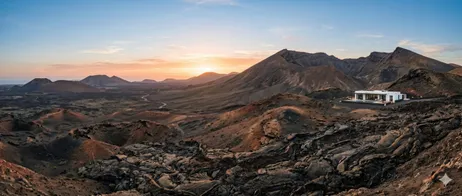
Fire Mountains in the South: Experience a Dramatic Landscape
Lanzarote captivates visitors with Timanfaya, volcanic landscapes, lava fields and striking scenery around the Montañas del Fuego.
Top Travel Tips for Your Holiday on Lanzarote
Discover practical travel tips for your holiday on Lanzarote. Learn what makes the volcanic island so appealing with its nature, beaches, villages and holiday homes.

The most beautiful places in Lanzarote for a holiday home stay
Discover the most beautiful places in Lanzarote for a holiday home stay. From beaches and volcanic landscapes to charming villages.
